
















THE EVOLVED EDIT
Qi2 vs MagSafe: Speed, Compatibility & What to Buy
Qi2 and MagSafe both use magnetic alignment, but they are not identical labels. Compare standards, speed, compatibility, adapters and certification.

Qi2 vs MagSafe in one minute
MagSafe is Apple's magnetic accessory and charging system. Qi2 is the Wireless Power Consortium's industry standard; its Magnetic Power Profile is based on MagSafe technology Apple contributed to the consortium. Original Qi2 products support a 15W tier, while Qi2 25W is the consumer name for Qi v2.2.1 and raises the standard's maximum to 25W. Actual charging speed always depends on the exact phone and complete power setup.
What is the difference between Qi2 and MagSafe?
| Question | Qi2 | MagSafe |
|---|---|---|
| Who defines it? | Wireless Power Consortium | Apple |
| What is it? | An open wireless-charging standard with a magnetic profile | Apple's magnetic charging and accessory system |
| Magnetic alignment? | Yes, for Qi2 Magnetic Power Profile products | Yes |
| Common power tiers | Qi2 at 15W; Qi2 25W at up to 25W | Up to 25W on supported current Apple combinations |
| Works across brands? | Designed for certified interoperability | Centered on Apple's ecosystem; non-Apple behavior varies |
| How do you verify it? | Match the exact product in the WPC certified-product database | Check Apple's device and charger guidance plus the accessory maker's exact claims |
The important similarity is alignment. Wireless charging uses coils, not the permanent alignment magnets themselves, to transfer energy. Centering the receiver and transmitter coils helps the system work more consistently.
What is Qi2?
Qi is the Wireless Power Consortium's global wireless-charging standard. Qi2 added a Magnetic Power Profile that specifies magnetic attachment and alignment. The WPC says that profile is based on MagSafe technology contributed by Apple.
The first Qi2 tier brought magnetic 15W charging. In July 2025, the WPC introduced Qi v2.2.1 under the consumer name Qi2 25W. The consortium describes it as nearly 70% more charging power than the original 15W Qi2 tier.
Qi2 does not mean every phone has magnets inside. Some phones may support the charging protocol only when paired with an approved magnetic case. Always check the exact phone model.
What is MagSafe?
MagSafe is Apple's system for magnetic alignment, wireless charging, and attachable accessories such as cases, wallets, stands, mounts, and battery packs. The name can describe charging products and non-charging accessories, so a “MagSafe-compatible” label alone does not tell you the charging wattage.
Apple's current guidance says its MagSafe Charger can deliver up to 25W with specified iPhone models, charger part numbers, and a 30W-or-greater adapter that supports the required output. Other iPhones have lower limits. Apple also says delivered power varies by phone model, adapter, and system conditions.
Qi2 15W vs Qi2 25W vs MagSafe 25W
A wattage printed on a charger is the maximum output the product is designed to provide under supported conditions. It is not a promise that the phone will receive that rate continuously.
- Phone limit: the phone must support the standard and power tier.
- Charger limit: a 15W transmitter cannot become a 25W transmitter when connected to a larger adapter.
- Adapter profile: the adapter must supply the voltage and current the charger requires.
- Cable: a damaged or unsuitable cable can limit the setup.
- Temperature: the phone can reduce power when it becomes warm.
- Battery level: charging commonly slows as the battery fills.
- Case and alignment: excess distance or poor alignment can reduce performance.
This is why a 25W label should be read as “up to 25W with a supported phone and correct setup,” not “every phone charges at 25W.”
Will a Qi2 charger work with an iPhone?
Many recent iPhones support Qi2 or MagSafe charging, but the speed depends on model and software. Apple's technical specifications and charging guidance should be the source of truth for the rate supported by your exact iPhone.
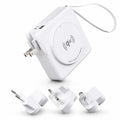
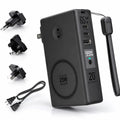
The current Evolved range includes:
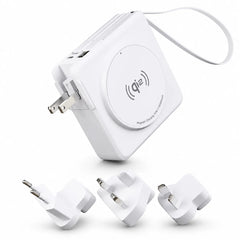
- MagCharge Qi2 25W, listed with magnetic wireless output up to 25W
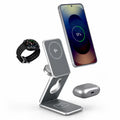
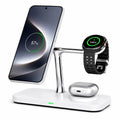
- MagFold Qi2 Twist 25W, listed with three charging surfaces and phone output up to 25W
- MagFold Qi2 Pro, listed with phone output up to 15W
- MagBank Qi2 Slim, listed with magnetic wireless output up to 15W
Those are product-page specifications, not a statement that every connected phone receives the maximum.
Does a MagSafe case work with Qi2?
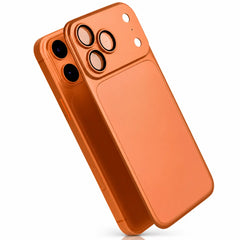
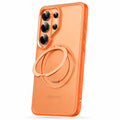
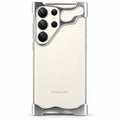
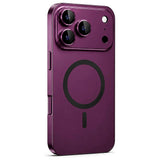
A correctly aligned magnetic case can support the physical attachment needed by many Qi2 accessories. Full charging behavior still depends on the phone, case construction, charger, and certification. A ring added in the wrong position can attach while leaving the coils misaligned.
Avoid placing loose metal plates, cards, keys, or non-compatible grips between the phone and charger. Apple notes that thick or metal cases can slow or prevent wireless charging and recommends testing without the case when troubleshooting. A purpose-built magnetic iPhone case should state its charging support for the exact phone model.
Qi2 Certified, Qi2 compatible and magnetic are not the same
The Wireless Power Consortium says a product is Qi Certified only after certification testing and inclusion in its official database. It specifically warns that phrases such as “Qi compliant,” “Qi compatible,” or “works with Qi” do not establish certification.
Before relying on a certification claim:
- Ask for the Qi certificate or Qi ID.
- Open the WPC certified-product database.
- Match the brand, product name, product type, model or part number, image, and supported power.
- Be cautious if only a visually similar original-equipment-manufacturer model appears under another brand.
Certification is not a vague family resemblance. The database entry must correspond to the exact consumer product being sold.
Which should you buy: Qi2 or MagSafe?
Choose a verified Qi2 charger when:
- You want an interoperable standard rather than a charger tied only to one brand.
- Your phone supports the relevant Qi2 tier.
- You can verify the exact product in the WPC database.
- You may use the charger with future Qi2 phones from different manufacturers.
Choose an Apple MagSafe setup when:
- You want Apple's documented charger-and-iPhone combination.
- You use Apple's magnetic accessory ecosystem.
- You have the exact adapter Apple specifies for the desired speed.
Choose by form factor after compatibility:
- A single magnetic charger for a phone-only setup
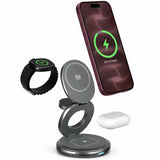
- A foldable 3-in-1 charger for phone, watch and earbuds
- A magnetic power bank for power away from an outlet
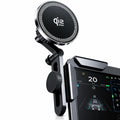
- A magnetic car charger for secure positioning while driving
Compare the complete charging setup
Browse Evolved magnetic and USB-C chargers. On each product page, check the listed output, included cable, adapter requirement, exact device support, and verifiable certification before choosing. For a multi-device setup, continue with the 3-in-1 MagSafe travel charger guide; for charging problems, use the case and wireless-charging checklist.
Frequently asked questions
Is Qi2 the same as MagSafe?
No. Qi2 is a WPC standard and MagSafe is Apple's system. Qi2's magnetic profile is based on technology Apple contributed, so they share important alignment concepts, but names, certification, and supported combinations differ.
Is Qi2 25W the same as Qi2.2?
The WPC brands Qi v2.2.1 as Qi2 25W. Retailers may use “Qi2.2” as shorthand, but the exact certified version and Qi ID are the reliable details.
Can a 25W charger damage a 15W phone?
A properly designed compatible system negotiates power rather than forcing the charger's maximum into the phone. Use reputable, correctly specified products and the recommended adapter; stop using damaged or overheating equipment.
Does a 45W adapter make wireless charging 45W?
No. The charger and phone determine the wireless output. A higher-capacity adapter can satisfy the charger's required input, but it cannot raise the charger above its own supported maximum.
Will Qi2 25W work with iPhone 18?
Check Apple's technical specifications for your exact iPhone 18 model. The phone, charger, adapter, software and temperature must all support the higher power tier.